What information is available regarding resources and training for medics to perform in austere environments and conduct prolonged care?

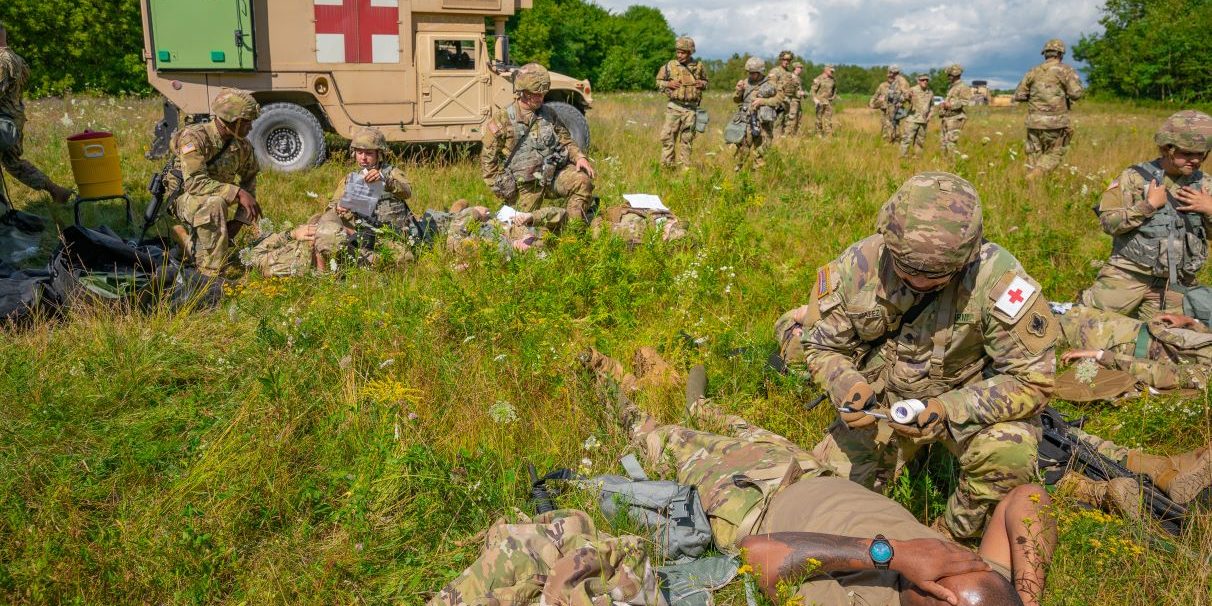
U.S. Army Medics perform first aid on simulated casualties. And ambulance is pared in the background.
Connecticut Army National Guard combat medic specialists treat simulated wounds and fill out tactical combat casualty care, or TCCC, cards during a mass casualty exercise, part of annual training, at Fort Drum, New York, Aug. 11, 2023. TCCC cards are kept with the casualty and serve as a record that documents their wounds and any medical interventions conducted during their treatment. (U.S. Army photo by Sgt. Matthew Lucibello)

Posted on September 2, 2025 | Completed on March 20, 2023

What information is available regarding resources and training for medics to perform in austere environments and conduct prolonged care?

The Homeland Defense & Security Information Analysis Center (HDIAC) was asked to provide resources and trainings available for medics to perform in austere environments and conduct prolonged care. Military medical professionals must often provide prolonged care in austere environments that have a lack of resources and pose logistical challenges and potential dangers. Therefore, it is important for military medical personnel working in these environments to acquire skills outside the range of their normal needs.

HDIAC utilized its active technical inquiry services to gain information based on this topic from its database consisting of subject matter experts. This report gives a list of tools and resources to prepare medics working in austere environments for the greatest success. Each tool is listed in alphabetical order and categorized by resources, learning platforms and certificates, and simulators.

Want to find out more about this topic?

Request a FREE Technical Inquiry!

Focus Areas