

There are three main kinds of choking agents: (1) ammonia, (2) chlorine gas, and (3) phosgene. Symptoms vary by agent type, severity, dosage, and exposure route (inhalation, ingestion, skin, and eyes) [2]. General symptoms applicable to all choking agents include, but are not limited to, irritation of the airway; difficulty breathing; accumulation of fluid in the lungs (pulmonary edema); nausea; vomiting; severe secretions from the nose, mouth, and airways; burning pain on the skin; skin ulcers; inflammation and burning of the eyes; temporary blindness; painful coughing episodes; and sudden death from lack of oxygen [2].
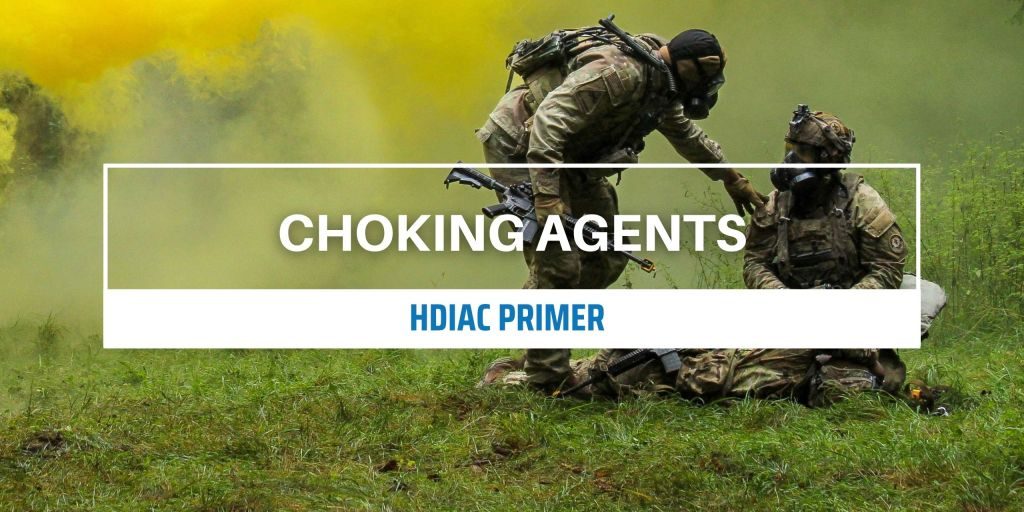
Image source: U.S. Department of War, Army Maj. Brian Sutherland, 7th Mobile Public Affairs Detachment
POSTED: October 4, 2025
What are choking agents?
Relevant Applications to the U.S. Department of War (DoW)
Chemical Weapon Detection
When faced with chemical and biological threats, the Warfighter needs to be prepared with the necessary technologies to detect threats and mitigate exposure. In partnership with Smiths Detection, the Joint Program Executive Office for Chemical, Biological, Radiological, and Nuclear Defense developed the aerosol and vapor chemical-agent detector, or AVCAD, that is expected to be fully operational by 2027. It is the first autonomous chemical detection system within the military branches and is highly reliable and very sensitive [3].
World War I
In 1915, the Germans used chlorine gas against allied positions in Ypres, Belgium. The gas proved effective, amassing 5,000 casualties and impeding Allied Forces from advancing their assault. Allied Forces responded by using chemical agents of their own. Phosgene eventually became the primary chemical weapon used in the war and was responsible for about 80% of all chemical-agent deaths. About one-third of American lives lost during World War I were a result of chemical-agent attacks [1].
Additional Resources
- Chemical Warfare Agents (PubMed Central)
- Using Nanoparticles to Treat Phosgene Exposure (Homeland Defense & Security Information Analysis Center)
Latest Related News/Articles
- Organ-on-a-Chip: 3-D Printed Tissue Allows Researchers to Study Effects of Toxic Vapors (3/18/2025)
- 4th Generation of Warfare Agents – Novichoks: Threats, Problems, Challenges for the Security of the Armed Forces and Civilian Population (3/3/2025)
- Nanomaterials-Enabled Sensors for Detecting and Monitoring Chemical Warfare Agents (12/26/2024)
References
[1] Compendium of Chemical Warfare Agents: Chapter 3 – Choking Agents (Springer Nature)
[2] Chemical Quick Reference Guides (The U.S. National Response Team)
[3] Modular Next Generation Chemical Detector to Provide Integrated Layered CBRN Defense to Joint Force (Homeland Defense & Security Information Analysis Center)