

There are three main types of blister agents: (1) sulfur mustard, (2) mustard-lewisite mixture, and (3) lewisite. The onset and severity of symptoms for each blister agent are dose- and route-dependent (inhalation, ingestion, skin, or eyes). General symptoms of blister agents include tissue damage, cell death, DNA damage, shortness of breath, severe cough, lung damage, stinging and burning of the eyes, sinus pain, nose bleeds, accumulation of fluid in the lungs, respiratory damage, and death [2].
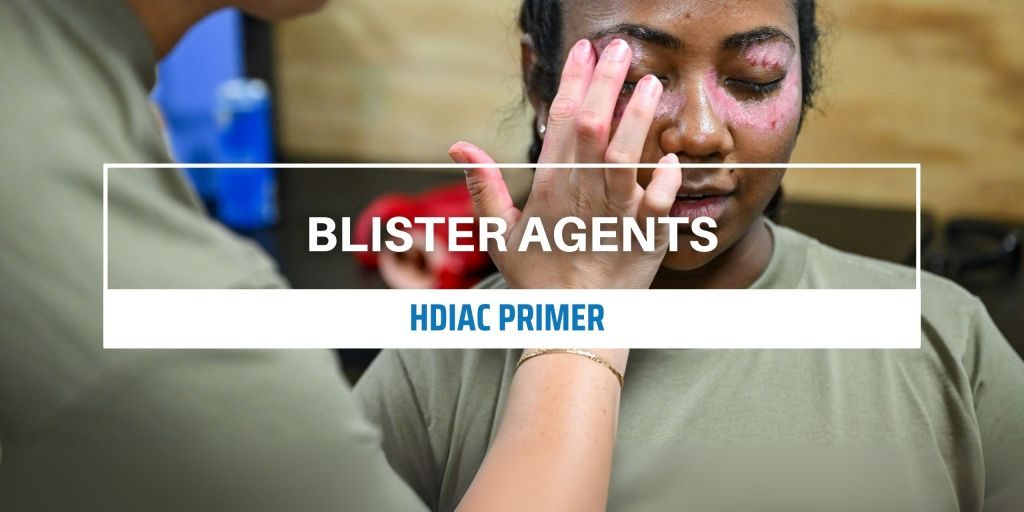
Image source: DVIDS, U.S. Air Force photo by Tech. Sgt. Noah J. Tancer
POSTED: October 4, 2025
What are blister agents?
Relevant Applications to the U.S. Department of War (DoW)
The Iran-Iraq War
Iraq deployed an estimated 1,800 metric tons of the blister agent sulfur mustard throughout the duration of the war. Over 125,000 chemical casualties were recorded in Iran, and over 40,000 Iranian veterans are suffering from the long-term effects of sulfur mustard [3].
Chemical Weapons Convention Compliance (CWC)
The CWC prohibits the development, production, inventory, and use of chemical weapons. It also aims to eliminate existing chemical weapon inventory and development facilities. According to the U.S Department of State, there are four countries in noncompliance with the CWC: (1) Burma, (2) Iran, (3) Russia, and (4) Syria [4].
Additional Resources
- What References or Fact Sheets Describe the Newest Technologies in the Detection of CBRN Agents and/or Material? (Homeland Defense & Security Information Analysis Center)
- Synergistic Acid-Base Action Leads to Ultrafast Decontamination of Nerve and Blister Agents by OH− Intercalated Zr4+-Doped MgAl-LDH Under Ambient Conditions (Wiley Advanced)
Latest Related News/Articles
- Photoionization and Electronic Structure of Chemical Warfare Agents (2/14/2025)
- Porphyrin-Moiety-Functionalized Metal–Organic Layers Exhibiting Catalytic Capabilities for Detoxifying Nerve Agent and Blister Agent Simulants (12/6/2023)
- Toxic Blister Agents: Chemistry, Mode of Their Action and Effective Treatment Strategies (10/19/2021)
References
[1] Handbook of Toxicology of Chemical Warfare Agents (Third Edition): Chapter 11 – Blister Agents (ScienceDirect)
[2] Chemical Quick Reference Guides (The U.S. National Response Team)
[3] Delayed Complications and Long-Term Management of Sulfur Mustard Poisoning: Recent Advances by Iranian Researchers (Part I of II) (PubMed Central)
[4] Condition (10)(C) Annual Report on Compliance With the Chemical Weapons Convention (CWC) (U.S. Department of State)